

Different ways Manuka honey can benefit the skin
Manuka honey is rich in bioactive compounds, meaning they are biologically active and have an effect on living tissues and cells. This is exactly why Manuka honey does so much for our skin – its bioactive compounds have a real and positive influence on skin health, helping soothe and support conditions like wounds, rashes, and other irritations. These same properties also make it useful on the skin of animals, including pets, farm animals and even injured wildlife.
The key bioactive compounds found in Manuka honey include
- Hydrogen peroxide (antibacterial properties)
- Methylglyoxal (MGO) (long lasting antibacterial properties, unique to Manuka-type honeys)
- Flavonoids and Polyphenols (antioxidant, anti-inflammatory and antimicrobial properties)
- Enzymes (gentle cleansing and pH balancing)
- Trace vitamins and minerals (Vit B & C, potassium, calcium, magnesium and phosphorus)
- Amino acids (supporting tissue repair and cell regeneration)
- Oligosaccharides – complex sugars like fructo-oligosaccharides (prebiotic properties). Note: These oligosaccharides are best known for their prebiotic effect in the gut. However, emerging research suggests these compounds may also support a healthy skin microbiome when applied topically, favouring beneficial skin bacteria over less welcome ones (1, 2, 3 & 4).
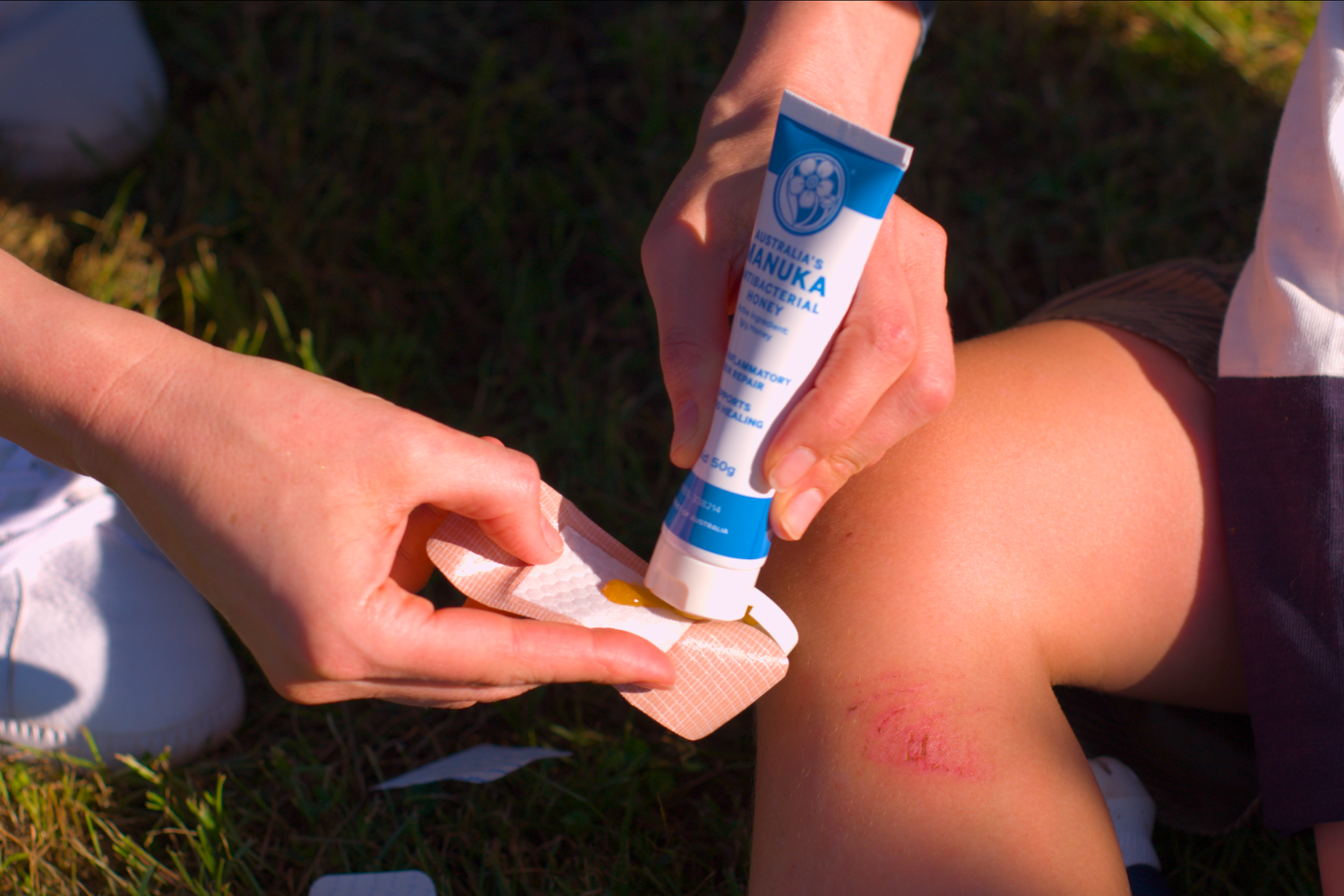
The top 7 Benefits of Manuka honey for the skin
1. Manuka honey keeps skin hydrated
Honey is naturally dense and has humectant properties, meaning it draws in and holds onto moisture. Used on the skin, this helps keep it nourished and hydrated – without the heavy or oily feeling you might expect from a thick, sticky liquid. This hydration works hand-in-hand with the other benefits below, forming the foundation for healthier looking skin overall (1, 2, 3).
2. Keeping the skin feeling silky smooth
Manuka honey’s mildly acidic pH plays a role in keeping skin smooth, but the real star here is gluconic acid – a gentle exfoliating compound (known as a polyhydroxy acid, or PHA) that’s naturally produced in honey as a by-product of its own antibacterial activity. PHAs are known for lightly loosening dead skin cells from the surface without the irritation that stronger exfoliants can cause, leaving skin feeling smoother and looking brighter. The natural osmotic effect of honey, which comes from its sugars, also adds to this too. It’s the same effect that gives honey its well-known debriding action in wound care, drawing out fluid and helping lift away dead surface cells (4, 5).
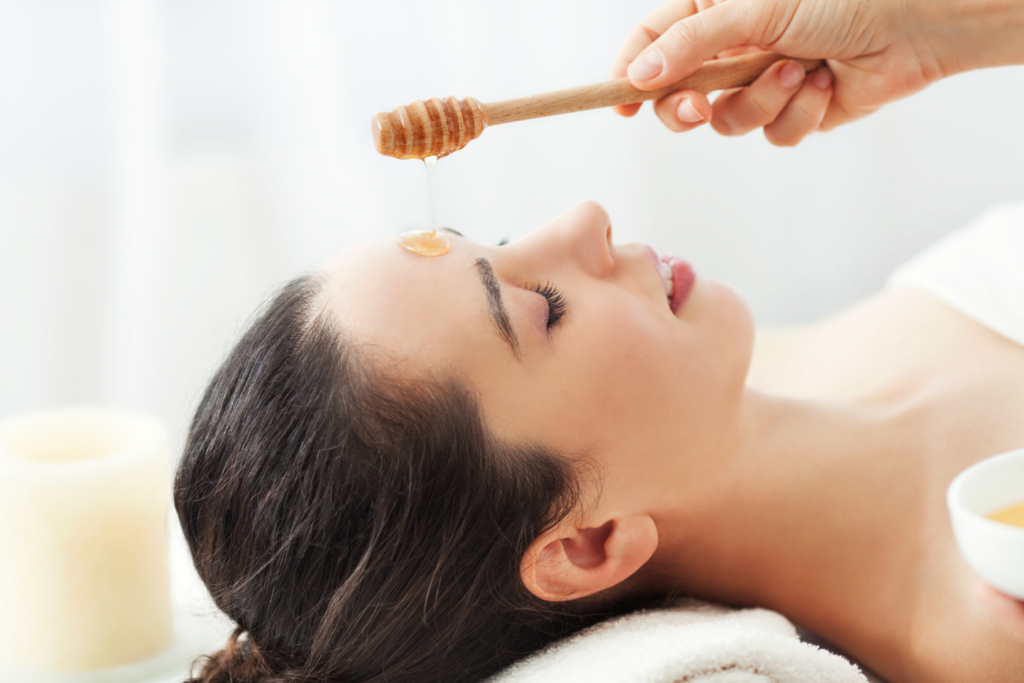
To try it, apply Manuka honey directly to pre-moistened skin as a simple cleansing facial, leave for around ten minutes, then rinse off with warm water.
3. Helps reduce ageing effects on the skin
The antioxidant properties of Manuka honey come primarily from its rich phenolic compounds, along with trace vitamin C and the enzyme catalase. Antioxidants work by neutralising free radicals, which are unstable molecules that damage skin cells and contribute to premature ageing, wrinkles and other visible skin changes over time.
Worth knowing: this antioxidant action helps protect against general every oxidative stress, but it isn’t a substitute for being sun smart. UV exposure is the single biggest driver of visible skin ageing, so Manuka honey is best thought of as a helpful addition to your skincare routine, not a replacement for sun protection (2, 6).
4. Many antibacterial properties, Powerful, long-lasting antibacterial action
Like most honey, Manuka honey contains naturally occurring hydrogen peroxide, which acts as a natural antiseptic and antimicrobial. But Manuka honey also contains MGO, which brings a longer-lasting, more stable form of antimicrobial activity. Because MGO does not rely on a fragile enzyme the way hydrogen peroxide does, it continues providing antibacterial benefits for far longer than regular table honey (1, 6).
5. A natural skin anti-inflammatory
MGO, flavonoids and phenolic compounds in Manuka honey all carry anti-inflammatory properties, working by inhibiting the production of pro-inflammatory cytokines and enzymes. This can make Manuka honey a soothing addition to your routine for a range of everyday skin concerns, including acne, eczema, dermatitis minor wounds and general skin irritations.
Manuka honey has also shown promise for diabetic ulcers specifically, though these should always be managed under the guidance of a doctor or wound specialist, given how serious they can become if they do not heal well (6, 7).
6. Fades scars and promotes wound healing
The bioactive properties of Manuka honey work together here. Its humectant qualities keep the area moist, its antibacterial action (MGO) helps keep infection at bay, and its anti-inflammatory compounds calm irritation, all while its natural osmotic action gently clears away dead tissue. Together this creates an ideal environment for healthy new skin cells to grow, which is part of why Manuka honey has been shown to help reduce both healing time and scarring (8).
7. Supports the treatment of acne
The antibacterial and anti-inflammatory properties of Manuka honey make it a popular and effective natural option for acne-prone skin. Its MGO content helps target the bacteria involved in breakouts, while its anti-inflammatory compounds help calm redness and soreness. The naturally occurring oligosaccharides in honey may add a further layer of support, with emerging research suggesting they can help inhibit Cutibacterium acnes, the bacteria most commonly associated with acne breakouts. Manuka honey can be used as a spot treatment on individual blemishes or applied more broadly as part of a facial (3, 4).

Are there any risks to using Manuka honey on the skin?
There are a few things worth knowing before using Manuka honey on your skin:
- Allergic reactions: true honey allergy is extremely rare, though some people react to trace pollen or bee proteins present in honey. Spot-testing on a small area of skin first is always a sensible precaution.
- Diluted honey: the antibacterial strength of honey depends on it being used at full concentration because its high sugar content and low moisture contribute to its antibacterial power. If honey is diluted too much (mixed with a lot of water, for example), it can lose this protective effect.
- Authenticity Concerns: there is a risk of purchasing counterfeit or adulterated honey. Purchasing Manuka honey from a reputable brand that has the Australian Manuka Honey Associations (AMHA) certificate of Authenticity which will assist to alleviate these concerns.
- Choosing the right MGO strength: different MGO grades suit different purposes. If the honey is not strong enough for what you are using it for, it may not work as well as you would expect.
- Sticky and messy: honey is sticky, though it washes off easily with warm water. For larger areas, mixing it with coconut oil can help reduce stickiness and make it easier to spread.
- Brief stinging sensation: some people may experience a short-lived stinging feeling when Manuka honey is applied to open minor cuts or minor wounds. This usually passes quickly, but if it persists you can rinse it off with water (9).
What are the best Manuka honey products for the skin
There are varying strengths of MGO Manuka honey available on the market, so you can choose the right level for your needs. For skin conditions specifically, we would suggest MGO 250+ as a good minimum. Any of the honeys below can also be mixed with coconut oil to make a soothing, easier-to-spread cream. For wounds or dressings, we’d recommend using honey at full strength (undiluted) to preserve its antibacterial effectiveness. Ideally, medical-grade honey should be used for wounds, as covered in our wound care guide.
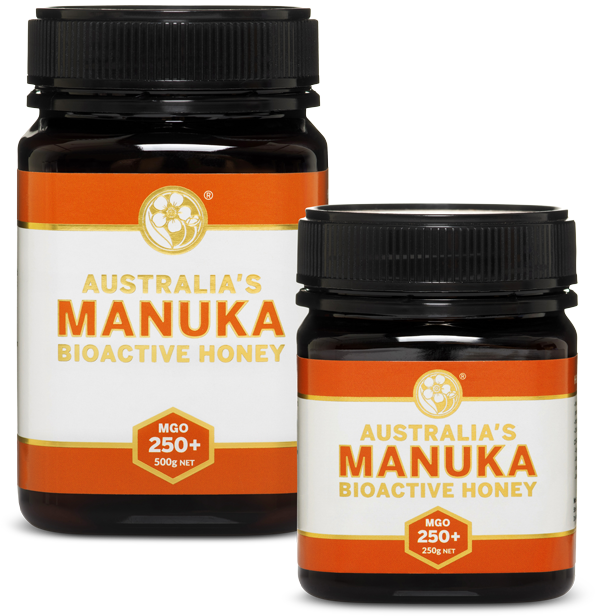
MGO 250+ a great everyday choice for minor cuts, burns and general skin irritations.
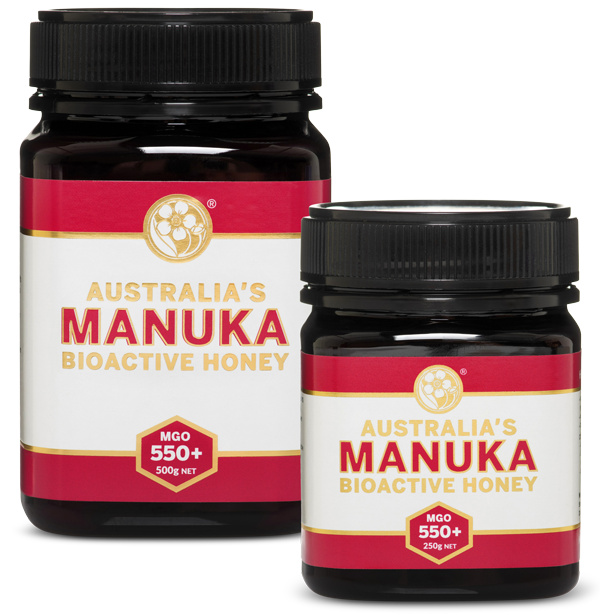
MGO 550+ a stronger option that works faster on the affected area. Well suited for acne or more persistent skin concerns.
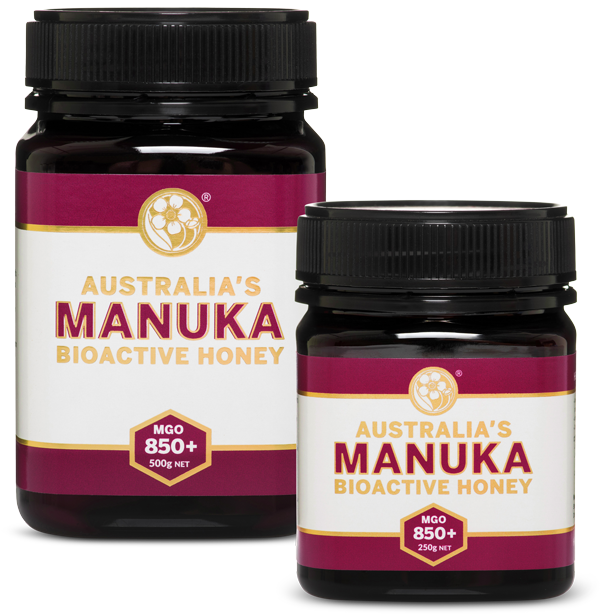
MGO 850+ this honey has more potent cleansing and antibacterial properties. This honey superior at treating wounds that are slow to heal or more serious skin conditions.
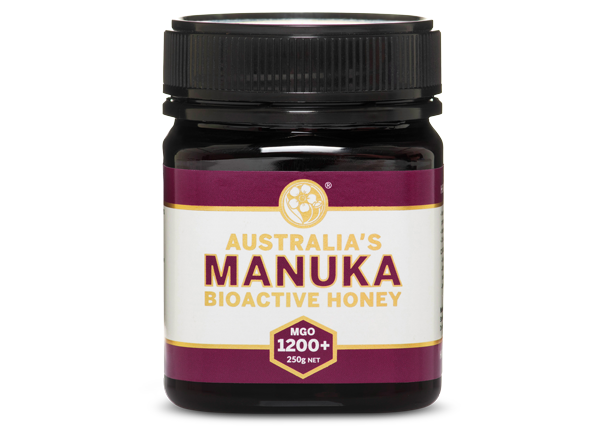
MGO 1200+ is a very strong MGO honey and can be used to treat skin conditions and irritations. This honey will give a potent treatment of antibacterial MGO to the skin.
Try Australia’s Manuka Honey with us today
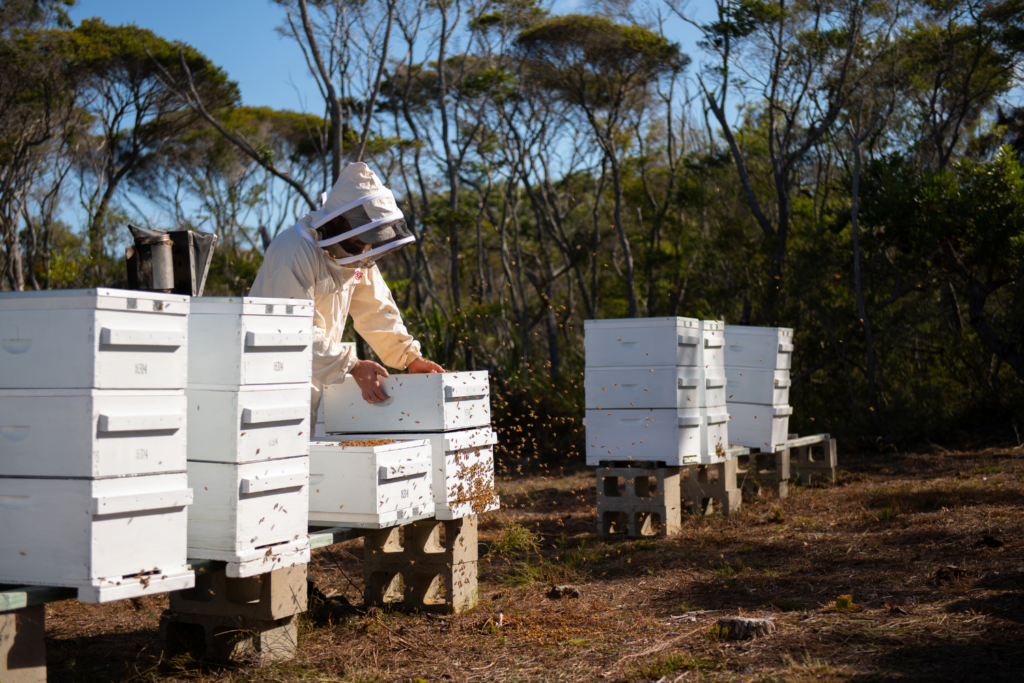
We are a family-owned beekeeping business and have been in operation for over 25 years. We pride ourselves on bringing quality high-grade Australian Manuka honey to the world. We offer Manuka honey in a range of MGO strengths to suit everyone. All our Manuka honey is tested at certified, independent laboratories to ensure accurate MGO ratings. We are also a founding member of the Australian Manuka Honey Association (AMHA).
Shop Manuka Honey here.
References
- Molan, P. (2012). What’s Special about Active Manuka Honey. Waikato University Papers, PDF7. https://www.academia.edu/2187608/Pdf_7_Whats_special_about_Active_Manuka_Honey
- Gheldof, N., Wang, X.H., Engeseth, N.J. (2002). Identification and quantification of antioxidant components of honeys from various floral sources. J Agric Food Chem, 50(21), 5870-7. https://pubmed.ncbi.nlm.nih.gov/12358452/
- Effects of short chain fructo-oligosaccharides on selected skin bacteria. Scientific Reports (2022). https://www.nature.com/articles/s41598-022-13093-5
- Petrov, R. et al. (2022). Prebiotic effect of galacto-oligosaccharides on the skin microbiota and determination of their diffusion properties. International Journal of Cosmetic Science, 44, 309-319. https://doi.org/10.1111/ics.12778
- Gluconolactone (a derivative of gluconic acid, naturally present in honey) as a polyhydroxy acid (PHA) exfoliant. The INKEY List. https://www.theinkeylist.com/blogs/news/what-is-gluconolactone (Note: industry/cosmetic-science source rather than a peer-reviewed journal — worth replacing with a peer-reviewed citation if you have one on hand.)
- Combarros-Fuertes, P., Fresno, J.M., Estevinho, M.M., Sousa-Pimenta, M., Tornadijo, M.E., Estevinho, L.M. (2020). Honey: Another Alternative in the Fight against Antibiotic-Resistant Bacteria? Antibiotics (Basel), 9(11), 774. https://doi.org/10.3390/antibiotics9110774
- Kamaratos, A.V., Tzirogiannis, K.N., Iraklianou, S.A., Panoutsopoulos, G.I., Kanellos, I.E., Melidonis, A.I. (2014). Manuka honey-impregnated dressings in the treatment of neuropathic diabetic foot ulcers. Int Wound J, 11, 259-263. https://doi.org/10.1111/j.1742-481X.2012.01082.x
- Blair, S., Cokcetin, N. Science or snake oil: is manuka honey really the bee’s knees? (internal science communication article)
- Australian Manuka Honey Association (AMHA) — Certificate of Authenticity. https://manukaaustralia.org.au/
hi there, just got the 850 mgo honey, just wondering how many times a week is recommended for a face mask ?
cheers
Hi Joe thank you for your purchase and supporting our family business. For face masks you could do it daily if you wanted or need to. It is great for acne and skin conditions. It is good to clean and moisten the face a little before use and apply to skin, leave for 10-15 minutes and wash off with warm water. You can also use it a spot treatment for skin conditions or mix with your preferred oil (we love cold pressed organic coconut oil) and then it becomes a balm for a larger area. You could do a honey facial weekly as part of your routine, you can mix it with coffee grounds to make an exfoliating mask, once a week is probably enough for this one. Thank You Australia’s Manuka Team
Hi!
We love m.honey!
U mentioned 850mgm
for more serious
Conditions of the skin!
Could that include low grade cancers?
( I can react against
chemical treatments!)
Thanks in
anticipation!!
Marj Drewitt,
Australia.
marjedrew@gmail.com
Hi Marj so glad you love Manuka honey, we do too! I hope you have tried our Manuka honey. It is truely one of natures gift to us!
With skin cancer we believe there is some research being done in this area with no definitive scientific research yet. The honey can certainly work after skin cancer removal to assist with healing. We have a Skin Repair tube on our website that would be perfect for this use. Thanks Australia’s Manuka Team
I just interested to see if manuka honey would help my skin. I have been on aspirin for a TIA i had in 2004 and know I bump my skin on my leg and skin just lifts, at this stage I can be so careful and then 6 months down the track I’m back at doctors getting dressing 3 days a week. Im hoping this will heip me in some way. Could you please tell me which one to use and can I buy at Chemist Warehouse.
Thank you
Hi Roslyn sorry to hear about your skin and wound concerns. Manuka honey is a great resource for wound healing we would recommend at least 250+ MGO but a higher MGO like 550+ or 850+ would be even more effective. You should apply the honey directly to the wound and place a dressing over it. Our blog ‘Manuka honey for wounds’ might be worth a read for you https://www.australiasmanuka.com.au/manuka-honey-for-wounds/. Unfortunately we are not at Chemist Warehouse. We are in some health food stores, at our local farm store and at the Byron Farmers Markets or you can purchase from our online store. If you sign up to our mailing address you get a 10% discount and we send our other discounts to our subscribers as well. Wishing you good healing for your skin and health. Thanks Australia’s Manuka
Good day.
I an 64 years old
I would like to know how manuka honey can help with deep wrinkles or lines on my face. Also please send me all the benefits of manuka honey for anti aging and how it works on the skin.
Also what strength do i buy for skin care?
Hi Elpida
Manuka honey has antioxidants and amino acids which benefit the skin. Antioxidants work against free radicals which age the skin through cell damage and amino acids which promote the growth of healthy skin cells. Manuka honey is also humectant which means is nourishes the skin as it draws and holds moisture in the skin. Manuka honey also contains vitamins and minerals that support the skin. These all contribute to supporting healthy skin. If you are using Manuka honey daily as a facial and eating for skin health, then you could opt for 250+MGO or 400+MGO if you are using it weekly they 550+MGO or 850+MGO would be suitable. Wishing you healthy skin, Australia’s Manuka Team
Thanks for sharing a useful and informative blog on the Benefits of Manuka Honey for Skin. You mentioned the nutrients and different types of health benefits of Manuka Honey. It is a learning topic and I learned a lot about Manuka Honey. I use manuka honey and get health benefits. How much honey can a heart patient drink daily? I like your blog and also prefer organic products.
Hi Shrea thank you for the positive feedback. As we are not doctors we cannot give medical advice, however Manuka honey is just like regular honey and can be eaten by the same amount. If you have concerns you should speak to your healthcare professional. Thank you Australia’s Manuka Team
Hi, I just want to say how grateful I am for this honey! My pup has a lame paw and she drags it at times causing an abrasion on the top of her carpus (wrist). I use the honey for treatment of her skin and it is amazing!! I use the 725+ MGO daily for about 5 days and redress her bandage each day. The skin heals beautifully!
After doing more reading on the benefits of this honey, I purchased the 250+ and plan to use it in my daily facial regimen.
Thanks for your comment Sandra. We love using Manuka honey on our pets. We do not sell a 725+ but our 550+ or higher would be great for treating her wrist injury as well. The honey is also really nice on our skin, we love a honey facial you can mix it with Aloe Vera, Bentonite Clay or even your left over coffee grounds for a bit extra. Enjoy!